
Misguided Priorities? You Decide

Eagle_Stadium

Photo posted on Wikimedia commons. Photo by Aerial Photography, Inc. Allen Texas High School.

Compare and contrast the priorities of two adjacent states. In an AP story today, we learned about how Oklahoma’s conservative approach toward taxes has resulted in teachers becoming eligible for a house from Habitat For Humanity, and their children becoming eligible for reduced price school lunches. See the story here:

http://wtop.com/business-finance/2017/08/charities-try-to-help-oklahoma-teachers-survive-pay-collapse/

Meanwhile, in a CNN story, we learn about the ongoing arms race in Texas football stadiums, where new high school stadiums cost as much as $70 million dollars. See the story here:

http://bleacherreport.com/articles/2729443-72-million-for-a-high-school-stadium-in-texas-its-only-up-from-there

I can think of nothing that displays the misplaced priorities of the US better than these two examples. In one state, teacher’s pay has stayed stagnant for a decade, while its GOP-led legislature maintained extremely low tax rates on oil and gas extraction, and in 2014 passed legislation to cut the personal income tax in the state. This has resulted in Oklahoma per pupil spending on public education to decline by a quarter from 2008 to 2016. Meanwhile, a spokesperson for Continental Resources, an oil extraction firm, says “We don’t have a revenue problem in Oklahoma. We have a spending problem.”

Across the Red River in Texas, things are full speed ahead for funding for worship spaces for the Texas state-sponsored religion, high school football. Katy (a Houston suburb that is probably now just wanting the rain to stop) has just completed work on their $72 million dollar facility, replete with luxury boxes and a $2 million dollar video replay board. Granted, Texas does support its teachers better than Oklahoma does, with their average teacher pay about 32nd in the nation as compared to Oklahoma’s position at 48th. Still, the excess public funding for athletic facilities, and the excess adulation given to young male athletes is out of all proportion to the true value of high school athletics.

Can you imagine what it would be like to work for a school system where they passed bond issues to improve the chemistry labs for their high schools? Or one where they upgraded their biology laboratories with modern microscopes instead of using manually focused machines that were obsolete in the 1970’s? Indeed, over and over again we see that the priorities of this nation are to prevent funding for new school academic facilities, preferring instead to cut taxes once again in order to stimulate economic activity. Ask Kansas how that’s working out for them?

We suffer in this country from a surfeit of selfishness. Republicans proudly commit to the principles of Ayn Rand, advocating full, pure, uncontrolled, unregulated laissez-faire capitalism as the only valid moral code. We no longer recognize a collective need for action and spending unless we ourselves directly benefit from such spending. How many comments on message threads state “Why should I support spending on schools? I have no children going to school.” Such flawed reasoning holds that since I have mine, and have already benefited from common societal spending, I have no duty to the rest of society to enable others to potentially gain the same benefits as I already accrued.

Indeed, you see many screeds in the blogosphere about the unfairness of being taxed at all, that all taxes represent a taking from someone who has earned everything they have. If our entire society thought and acted like that, then we would live in a world of constant violence, where only those who could spend for defensive capabilities would be allowed to hold on to their own hard-earned assets. Taxes are necessary, and the belief that lowered taxation will always result in increased economic activity, so much so that it will lift the entire society out of poverty, has been proven demonstrably false. State after state has attempted that as a prescription for stagnant economies, and in each case, the results have not met expectations. See Kansas and Oklahoma and their growth rates vs. that of California, who chose a different path.

The issue of spending on schools, both teachers and facilities, is symptomatic of the direction that this nation has taken over the last four decades. At the national level, we grew tired of a congressional appropriations process that resulted in infrastructure spending only where it benefited powerful congressmen and women. So we banned earmarks, and now have included all infrastructure spending within the discretionary spending caps which are falling further and further behind in meeting critical needs. Meanwhile, attacks on unions have created the image of the Teachers Union slackers, living high on the hog on our largesse while simultaneously shirking their responsibility to adequately educate our children.

It is certainly true that the past method for allocating infrastructure spending was fraught with manipulation and waste. That is not an excuse though for letting all of it rust away and collapse like the levees did in New Orleans. We need civic-minded politicians who are willing and able to accept the recommendations of experts, who can assign priority to the critical infrastructure upgrades that are needed. These experts must also assess the capabilities of our construction contractors. Since we have neglected necessary funding for so long, we cannot scale back up immediately with 2x or greater spending on roads and bridges. We need to ramp up the spending rate over time, and we need a plan that is longer than that of a continuing resolution in order to provide contractors with the confidence that they can procure additional equipment, and hire trained workers, and receive an adequate return on their investment. Not to mention that we need some sort of training protocol for those who would benefit from infrastructure jobs. I know, I referred to the ultimate oxymoron – civic-minded politicians. In this day and age of polarization and political fratricide as practiced by President Trump, it is nigh unto impossible to conceive of a civic-minded politician. Put your disbelief away for a while, and just imagine a congress packed with such critters.

Likewise, public school education has suffered from waste, and a lack of accountability. It is unacceptable to have incompetent teachers protected from losing their jobs due to bureaucratic procedures. We need to enable the system to eliminate those teachers who do not perform, while increasing the pay so that the profession attracts more capable applicants who would actually be able to pay off their student loans. But it also needs to be acknowledged that we have failed our education systems by systematically refusing to upgrade facilities, voting down bond issues repeatedly until the very roofs start caving in on the poor students caught in the public school system. The solutions identified by the head of the Department of Education involves increasing the profit potential for investors in charter schools, affecting only a fraction of the total school population, instead of offering real assistance in enabling our school systems to succeed. We don’t need curriculum mandates and charter schools, we need assistance for teacher salaries and school facilities.

America was great when we had a firm commitment to public schools, and to public infrastructure. That we have meandered so far away from that commitment speaks to our failure to reinvest in our future. Are we that selfish that we opt for a fragmented and failing society just so we can retain a few more percent of our income? But the philosophy of conservatism since the days of Reagan keeps insisting that prosperity is just one more tax cut away. Sad. So sad.


It Was Totally Worth It!

2017-08-22_599c31f75a299_DSC_2437TCropPS_1000

Photo courtesy of Sky and Telescope web site.

It was about 10:30 on Monday morning that we saw our first eclipse tailgaters parked in the ubiquitous church parking lots and also along dirt and gravel roads leading out into farm fields of soybeans and cotton. We were cruising down US 601, heading to Orangeburg, South Carolina, and my adult children were still berating me for getting them up at 6:30 because I was afraid of the gridlock that could have covered all of the roads south out of Charlotte. Traffic going down into the zone of totality was non-existent, and there were no backups anywhere.

Eclipse tailgating! That would have been a good idea. Groups had their shade canopies and lawn chairs, most folks had coolers, and some had even brought grills and other food items out to enjoy before the big event Monday afternoon. As for us, we had made a stop at Mr. Bunky’s Market on US 378 east of Columbia. This was quite an eclectic place, two gas pumps keeping sentinel outside, an interior with a second floor that was part antique store, part flea market. The main floor held everything from PVC pipe fittings to burlap bags advertising 50 pounds of Mr. Bunky’s Marijuana. There was a restaurant on the side that we didn’t go to, but we did get our commemorative eclipse t-shirts with the palmetto and sun phases on the back. Mr. Bunky’s was my fall-back viewing location if traffic was horrible, but since we were so far ahead of schedule, leaving this store by 10:15, we went on to my primary objective of Orangeburg.

Thank heavens for Google Earth and Google maps. Using those tools, I could scope out the entire route. We made it to Orangeburg by 11 AM and stopped at the FATZ restaurant near the intersection of I-26. They were advertising their eclipse party, and had 100 pairs of glasses to give away, but we didn’t need any since we were well equipped. After a leisurely meal and an appropriate beverage, we adjourned out to the back lot of the restaurant, where a few trees offered shade. We set up our lawn chairs and awaited the celestial events. Clouds were blessedly few, but still could have interfered.

Initial contact for us was at 1:14. Within a minute or two, it was evident that there was contact with a dark form just touching the rim of the sun. I started to take photos every 15 minutes of the ambient light, hoping to see the transition from light to dark after the eclipse was over. The word of the day was inexorable, as the moon continued its steady incursion over the sun’s surface. Still, there was no observable difference in the light that we saw.

A family in a van who had driven up from Charleston parked near us, and set up their display tools. Besides the glasses everyone sported, they also had brought a colander, a box with a pinhole for observation, and the best touch, a piece of cardboard with 8 20  2017 punched out with small holes. When they held that cardboard up, the second white piece of poster board held the image of the sun with an increasing amount of black displacing the light from the sun. They described the image as the pac-man sun, and that was very appropriate. They kept taking pictures of the date image as the eclipse progressed.

After about an hour, you got the sense that the light was changing slightly. Difficult to describe, but the light began to seem a bit fragile. I started taking pictures every 5 minutes at this time. The change in the light kept coming, and as it started to visibly darken, the light had a bluish tint. I thought about that, and it’s my belief that we normally associate sunrise and sunset with a reddish tint. That’s partially due to the longer path that the light takes through the atmosphere, and it tends to scatter the light and emphasize the redder wavelengths. But with an eclipse, the sun is shining straight down, and it is more of the blue of the sky that you sense as you head towards this unnatural dusk.

By the time you got to 10 minutes before totality, it became noticeably dark. The parking lot lights began to flicker on and tried to fight this unexpected dark. Still, I did not see any bird activity, nor did I hear crickets start their evening chorus. We were near woods that led towards a railroad track, so we could have seen these things, but I didn’t notice this happening. The tailgaters out in the country probably did.

As totality neared, everyone was craning their necks up with their eclipse glasses watching the last thin remnant of the crescent sun disappearing. We were not blessed with the brilliant images of Bailey Beads, or a diamond display as the last rays vanished behind the moon. Then, as the eclipse glasses grew dark, we removed them and saw…..

Totality! The pearly glow of the corona extended out about one solar diameter from the surface on all sides. It shimmered with white-hot ferocity around the black disk of the moon. At about 4 or 5 o’clock on the disk, there was just the faintest touch of orange extending over the moon’s surface. We actually saw a solar prominence with the naked eye. I had tried to take some pictures with my cell phone camera, but looking at the images later, it was obvious that the corona was too strong to image properly.  I didn’t want to look away from the corona, but forced myself to briefly look around at the horizon. Light shone faintly in all directions as the sky outside of the zone of totality stayed illuminated by the remnant of the sun.

It is impossible to fully convey the image of the corona. It was the single most incredible image I’ve ever seen myself. Dazzling. Irresistible. I can see why some people become eclipse chasers, willing to spend whatever it takes to experience this image repeatedly in their lifetime. And then, it was over. Sunlight peeked over the rim of the moon, and it became necessary to put the eclipse glasses back on. Cheers erupted from the crowd as we all knew that the best part of the show was over, but we all reveled in the experience.

I remember back in 1979 during the last eclipse, I was working at a chemical plant. There they had welding goggles that we were able to use to look at the sun, and I remember using the pinhole method to see the image of the sun projected and showing the portion swallowed up by the sun. But for anyone who questioned whether it is worth it to get inside of the zone of totality, it is totally worth it. It is only during the last few minutes when the solar illumination is about 2% or less that you really sense the difference in light level, and seeing the corona is just incredible and is an image that I will take with me through the rest of my life. Make your plans now for 2024, because it is worth it.

After totality, everybody started packing up. My older son was going on down the road to Folly Beach for camping, so we said our farewells. My younger son came back with us to the hotel to decompress from the event. We encountered much more traffic on the return trip than we did on the way into the zone of totality. Still, traffic didn’t prevent us from seeing, and no clouds obscured the entire time of totality. And I got to share this incredible experience with my whole family. It just didn’t get any better than this.

The Shadow of Moon’s Smile

solar-eclipse-1116853__340

It’s coming! An event that long ago showed up as a dream marker upon my imagined future life trail. The eclipse of August 21, 2017. As a child I was fanatical about all things related to the cosmos, and I devoured all of the books I could about astronomy and cosmology. I confess that I learned I was a nerd even before the word was invented. How many 2nd graders do you think had a strong conviction on the then current scientific controversy on whether the universe was the result of a big bang, or whether the steady state theory was the explanation for the observations of astronomers. I was quite firmly on the side of the big bang. This was a year before the discovery of the background microwave radiation that was the echo of the big bang, and there were indeed two schools of thought on the explanation for the observed universe. Being proven right on the big bang led to many more theories that I expounded upon during my childhood.

Since eclipses are known, predictable events, way back in the 1960’s I realized that if I was alive in 2017, a total solar eclipse would happen right over my head in Lincoln, Nebraska. That was the first total solar eclipse that I would be able to attend without travel to a foreign country (and back in elementary school that seemed to be so far out of reach). Now fast forward over 50 years, and I am now in the position of nervous anticipation of the event of August 21. I have our hotel reservation near the band of totality. Our two sons are planning to join us for the final journey to the strip of land that will experience darkness in the middle of the day.

Two things cause me nervousness in anticipating the event. First is traffic on the morning of the 21st. I will be 70 miles outside of the band of totality. I’m avoiding the interstate like the plague, but there will still be thousands who will follow the road that I will take, slowing our progress. I will probably antagonize my family by insisting that we get up and leave much, much sooner than we really need to, just to make sure that we get there in time. Ideally we want to go about 130 miles to our preferred viewing site, but the absolute must is to make it to the band of totality.

The second thing that causes me anxiousness? The weather. We will be in central South Carolina, and the sky conditions in this part of the south are iffy at best, both historically and in the extended weather forecast. I can say to myself that if clouds obscure the view, at least I will experience the coming of sudden darkness, followed by an instant morning, But that will never substitute for the absolute thrill of seeing the corona emerge, shining eerily over the surface of the darkened side of the moon. It would be extra special if there were a solar flare at the time that you could see, but just seeing the physical manifestation of the solar wind will be awesome.

Well, you pay your money and you take your chances. South Carolina offered the only opportunity for my entire family to attend this event, so we will be going in a spirit of optimism, rather than pessimism.

If we miss it this go around, there is a subsequent eclipse coming up in 2024 that bisects the country again. I hope to be able to travel to it as well, but the first shot I have will be my best hope.

I Read The News Today, Oh Boy!

The story in the paper finally explained to me why I feel like an alien in the land of my birth and an alien in my chosen religion. Dr. Robert Jeffress, who had previously escaped my notice as a pastor of a megachurch in Dallas, explained to me how it is that Donald Trump is God’s weapon of choice to take out the evil exemplified in the North Korean government. “In the case of North Korea, God has given Trump authority to take out Kim Jong Un.”

That statement and the belief system underlying that statement are so alien to me that I am seeking vainly to forge any type of reality-based connection to someone who would make such a horrendous statement and issue it as speaking with the authority of God. How to begin? Well, first I would say that anyone who would defend the taking of military action resulting in the deaths of millions of humans is not speaking with the authority of God. Those who take the name of nuclear holocaust in vain share the unimaginable consequence of being responsible for the immense loss of life and the innumerable lives that will be changed due to the detonation of nuclear weapons. To think that such a consequence would be due to someone just demonstrating to Vladimir Putin that he has cojones makes the potential devastation just that much more sickening.

I have wondered how the group of folks associated loosely as evangelical Christians could ever have supported such an overt sinner as Donald Trump. Yes, I use the biblical term sinner to define his existence prior to seeking the Presidency. Donald Trump revealed himself to be a sinner as he failed to pay multitudes of small contractors what they were owed for services to his multiple properties. Why? Mainly because he could and it would be too expensive for a small contractor to demonstrate harm from the behemoth that was the Trump empire.

Donald Trump revealed himself to be a serial adulterer and as someone who used his position of power to extract sexual benefits during his association with the Miss Universe beauty pageants when he ran that obsolete version of an event aimed at objectifying women. For evangelistic Christians to overlook the multiple adulteries of Donald Trump while they crucify his predecessor for imagined sins of, well, I’m not sure what sins Barack Obama was actually accused of. I never heard an accusation of womanizing as he has been faithful to his only wife throughout his marriage. I never heard of an accusation where Barack Obama admitted to taking liberties with women because it was overlooked for those individuals who were blessed with power and status. Even taken from the biblical perspective of “he who has not sinned, let him cast the first stone” does not seem to apply to Donald Trump’s predecessor. Although Donald Trump certainly lobbed many paving stones at Barack Obama accusing him of being a less than 100% American born citizen.

Donald Trump demonstrated his ability to steal from his lessers when he established his ersatz Trump University. Can you imagine someone audacious enough to attempt to cash in on his bogus reputation as a master real estate developer by offering a cascading offering of real estate courses, each level purporting to reveal more and more secrets from the man himself (of course for a much higher price), only to reveal itself as a fraudulent enterprise aimed at preying on the dreams and aspirations of those who had been damaged beyond redemption by the financial crisis and the subsequent financial collapse. That Donald Trump was ever required to provide financial reparations for his rapacious greed is a miracle of contemporary jurisprudence.

Donald Trump demonstrated that he has no concept of the term of bearing false witness. Through innumerable statements he has made, he continues to bear false witness even against himself, due to the volume of falsehoods

he has made that he subsequently contradicts in a later statement. Or tweet. We haven’t even gotten into the issue of him using a new media offering as his unfiltered access to his base. Well, if he has a base, it is pure sodium hydroxide solution, and his credibility is softening into mush as it soaks in this solution.

No, what I realized when I saw the comments from Dr. Jeffress, is that Donald Trump is a manifestation of a phenomena that first revealed itself when I was a teenager. At that time, a Presidential candidate by the name of Richard Nixon invoked the Silent Majority as critical supporters of his bid for office. He was able to convince enough voters that his view of America as being intolerant of dissent, insufficiently strong to withstand opposing viewpoints, and convinced voters that he alone held the secret answers to solve the external problems that plagued America in the era of Vietnam and hippies.

The same divide that was enunciated in our culture in the 1970’s TV show All In The Family still shows up as fault lines in our current society. We are still divided into the hard hats and the hippies of those days. You either support Archie Bunker, or you support Meathead. The difference is that now both sides of the cultural divide have our own media environments to reinforce our biases with the 24/7 proclamations of our chosen media service. Since we can inoculate ourselves against exposure to opposing viewpoints, let’s do so now and therefore prevent us from ever considering that we may be wrong in our beliefs.

As I reflect upon the comment from Dr. Jeffress, I realize that indeed, the perspective he espouses could be found in the Bible – deep in the bowels of the Old Testament, where the sexploits of the leaders of the Israelites are documented. Where the cruelties inflicted upon the enemies of Israel are celebrated throughout the books of Judges and Kings, where the will of the Lord is reflected in an angel slaying one hundred and eighty-five thousand Syrians, leading the sons of the King of Syria to slay their own father. This is the mentality that is reflected in someone saying that it is the will of God to bring untold misery into the world by unsheathing the nuclear sword once more upon the world.

Much ink has spilled over the differences between conservatives and liberals. It seems to this follower of Jesus that the conservative position is for those who long for the Old Testament vengeful God, those who believe that strength defines right, those who believe in subjugation of the individual to the majesty of the government. The liberals favor the wisdoms revealed in the words of the Gospels, where the government is addressed as having authority (render unto Caesar), but the kingdom defined is not mainly of the government. Instead, the entreaty is to treat the stranger as a friend, to share with those who have the least, and to express righteous indignation at evil being done even in the house of worship. Of all of Jesus’s faults in the eyes of the Pharisees, the one that was unforgiveable was interfering with commerce in upsetting the tables of the moneychangers in the temple.

Maybe just gaining this perspective for myself can help me to deal with having to coexist with a segment of the population who share few of my values. At least I can understand their frame of reference, and maybe that is a start in trying to bridge the gap between two diametrically opposed perspectives. That it took referring to texts from thousands of years ago to gain this perspective, is indicative that the differences in perspectives has always existed, and we as a species are no closer to closing the gap between us. Only now, the stakes are higher since our tools of destruction have grown immeasurably more deadly.


Flo and ebb on the coast

For those who live in towns designated as ports of call on the ocean coasts, there are two totally different tides that rule their lives. The timeless ebb and flow of the waters, first flooding the marshlands of the coast, then pulling away, running backwards out to sea. Life has been nourished through this endless rhythmic cycle.

Then there is the human tide, unleashed when a cruise ship opens its umbilical cord to the welcoming greeting of the coastal town’s inhabitants. These residents are dependent upon the flow of money emanating from the cruise ship passengers, waiting for their share of the fertilizer that will be left behind in their wake.

blog picture


For some towns, the arrive of a ship’s passengers is scarcely noticed. Large enough to absorb the swell of the human tide, they offer many options for the passengers who only have a few hours to partake of the culture of the port. But for a small port, the flood of passengers can become a tsunami, overwhelming the limited facilities available. The crowds cause delays, impatience grows, and both the passengers and residents resent each other. Still, the residents are dependent upon the monetary opium left behind by the passengers.

The tide recedes, the passengers pass back through the ship’s umbilical cord, and wthe ship sails away with a blast from it’s horn. The residents of the port of call can settle back into their natural rhythm of the tides, awaiting the next time when a human tide is unleashed upon their shore.

Note to readers. My wife and I just finished a wonderful cruise from Boston to Montreal, and stopped at multiple ports of call on our way. It was the first ocean cruise either of us had ever taken and thus we had no basis for comparison. We loved the attention we received from the mainly Indonesian crew, but more than anything else, we loved the serendipity from our dinner companions. If you wished to dine in the dining room, it was necessary to make reservations, and we chose to agree to share dinner with strangers. The last night of our cruise, we shared a table with two other couples. We are from South Charleston WV for reference. The first couple was from Bluefield WV, at the far southern end of the state, where he was a EN&T surgeon, and his wife was a nurse in his practice. The other couple we ate with was from Boca Raton Florida. Their connection to West Virginia was that the wife was related to a very prominent dental family in the Charleston area who are continually advertised on the television.

We did not find exceptional coincidences on the trip. I grew up in Lincoln Nebraska, which is about ready to experience the totality of eclipse. We saw a gentleman wearing a University of Nebraska shirt and when we enquired, found out he and his wife are from Beatrice. That is at the height of totality, near where Bill Nye the Science Guy will be hanging out on August 21. But we did not find anyone that we knew on the trip (I did try to figure out the mathematical odds of meeting someone I knew on the cruise, and swiftly gave up due to the complexity of the computation). But we did find more like-minded individuals who were opposed to the current US administration than we found who supported it.

As this was my first ocean cruise ever, I will wish to share some observations later. But for now, may you have a bon voyage as we had on our Holland America cruise from Boston to Montreal.


Is This Sentence Too Long For You?

twitter-566341__340

One hundred and forty characters. That is the new delineation between acceptable political discourse, and incomprehensible gibberish, according to the new world order. Twitter me this: Are we so limited in our attention span that we can only understand concepts described in 140 characters or less?

The simple answer is, yes, we have regressed back into simplicity. We are so immersed in the shallowness of thoughts induced by our addiction to our electronic devices, that we now find it uncomfortable to concentrate for longer than a single tweet. And, appropriate for a nation addicted to fluff, we have selected a celebrity leader who epitomizes our shallowness.

When did we begin to worship “the cult of the celebrity?” Certainly in the 1800’s, the emergence of celebrities began. Fostered by the development of mass media (newspapers and magazines), and the growth of cities, a critical mass coalesced whereby people could become familiar with famous people, even if they never had the possibility of seeing these people perform. Think of Jenny Lind (supported by one P. T. Barnum). Think of Buffalo Bill Cody and his Wild West show. Think of Samuel Clemens and his touring lectures. Certainly in the late 1800’s, it became possible for individuals to become famous for being famous.

By the early 1960’s, the cult of the celebrity was well established. In 1961, Daniel Boorstin wrote in his seminal book “The Image, or What Happened to the American Dream”, “The celebrity is a person who is known for his well-knownness”. At the time he wrote those words, it applied to a much smaller group of people. Zsa Zsa Gabor comes to mind as exemplifying celebrity culture in the late 1950’s, and even then she did have some accomplishments as a movie actress. Boorstin was definitely prescient in foreseeing the direction of the culture.

America has also harbored a strong anti-intellectual bent. One of my favorite movies, Bringing Up Baby (and it’s ’70’s remake, What’s Up Doc), personified the attitudes towards intellectuals and scientists in popular culture. Cary Grant is the hapless paleontologist who inexplicably becomes the pursued object of the alpha female Katherine Hepburn. It is Hepburn as the mob moll, spitting out the end of a cigar, who rescues the scientist from incarceration. Small point, maybe, but except for film biographies of noble scientists struggling against society, movie culture rarely pictured scientists at all, and if they were pictured, more often than not they were objects of ridicule. They were the Nutty Professor instead of the rugged individualists portrayed in hundreds of westerns.

Today, anti-intellectualism is worn as a badge of honor by many in our society. In our schools, those who excel academically are derided and bullied by those who do not value scholastic achievement. In government, our politicians state, “I am not a scientist, but…” just before they explain why they are against scientific consensus on an issue, usually climate change. Anti-vaxxers who couldn’t describe the functions of vaccines in stimulating the immune system, claim that the cost / benefit ratio of vaccines has been miscalculated ever since the invention of the smallpox vaccine. And since the latest Presidential election, the scientists of the Federal government have been demeaned, threatened with slashed funding, and have been removed from any position of power and influence. Indeed, as of early July, no one has been nominated for the position of National Science Advisor.

Science and scientists have taken the brunt of the anti-intellectualism of the Trump administration, but other intellectuals are the victims of his misguided philosophy of dismembering government as a ruling strategy. Why rely upon professional diplomats who have spent decades studying issues and learning about regional and global political issues? Let’s just go to a meeting of world leaders and wing it. What could possibly go wrong?

So now we have the Tweeter-in-Chief using stream of consciousness to posit the latest birth of a thought (A cyber-security cooperative between us and Russia!), only to come back 12 hours later saying, “Not gonna happen!” My question is who is going to end up running the Trump empire once all of the key players end up imprisoned due to their actions during the campaign and subsequent time in power. Maybe we can get a remake of the First Wives Club (or first and second and third wives club) with Ivana, Marla, and Melania? I’d pay to see that.

Back to 140 characters. It is so deeply ironic that when NPR decided this year to not only recite the Declaration of Independence, but to tweet it, that many in the twittersphere took the words of our founding fathers as disrespect against the dear leader. Can you imagine that happening in any time other than the present, that such profound ignorance would display itself in a public medium?

I am reminded of the wisdom of the National Lampoon back in the early 1970’s for their parody, Deteriorata. (https://www.youtube.com/watch?v=Ey6ugTmCYMk ). They, too, foresaw what was happening, and where we were headed. One of my favorite lines in this piece is: “Be assured that a walk through the ocean of most souls would barely get your feet wet.” What an appropriate metaphor for government of the tweet, by the twit, and for the twitted.

Obstruction, Thy Name Is Grover

It started with an effort in California to rein in property tax increases. With the enormous growth in population and property values in California reflected in the 1970’s property assessment rates, Howard Jarvis was the organizing force that enabled Proposition 13 to succeed at the ballot box in California in 1978. Proposition 13 froze real estate taxes in California and greatly limited the potential rate of property tax increase allowed. Thus began the revolt against any form of increased taxes that became the mantra of the Republican party since that time.

President Reagan in 1981 assumed the mantle of the outsider who decried and denounced the government in his inaugural address. “In this present crisis, government is not the solution to the problem; government is the problem.” He then took the lead in the passage of two significant income tax reductions during his two terms. Yet he wasn’t totally committed as an anti-tax ideologue, since he also oversaw several tax increases that affected social security taxes, and broadened the taxable base, exposing formerly exempt forms of income to the new lower tax rates.

This inconsistency from the leader of the Republicans led a 29-year old veteran of anti-communist battles across the globe to create an organization that has hobbled the US ever since its founding. Grover Norquist established Americans for Tax Reform (ATR) in 1985 as requested by President Reagan, and shortly thereafter became the chief evangelist for the philosophical position that all government spending is bad, and that it should become an existential crisis if a Republican politician ever supports a tax increase. Thus began the saga of the pledge, the Taxpayer Protection Pledge, that an overwhelming number of Republican legislators have affixed their signatures to, stating that they will “oppose any and all efforts to increase the marginal income tax rate for individuals and business; and to oppose any net reduction or elimination of deductions and credits, unless matched dollar for dollar by further reducing tax rates”.

So much of the polarization in Congress flows directly from the pernicious effects of this pledge, and from the personal crusading of Grover Norquist against any attempt to increase tax revenues, either at a federal or a state level. Indeed, the state of Kansas attempted to follow the guidance of Norquist and fellow economic guru Arthur Laffer by slashing their income tax rates in order to unleash a supply-side revolution at the state level. Five years later, with the state hobbled by the unforeseen consequences of the tax reductions, the legislature of Kansas overrode their governor’s veto of tax increases in order to restore the functioning of the state government at a minimal level. Governor Brownback is not chastened, though, and still champions the same tax slash and burn strategy for the Federal government.

Grover Norquist’s penchant for bullying recalcitrant Republicans is straight-forward. As the Washington Post quoted Norquist in a July 12, 2011 story, “There are times,” he boasted, “when we’ll call everybody in the congressional district and let them know that one guy signed the pledge and one guy didn’t.” Indeed, the reluctance of Republicans to seriously address needed fiscal remedies stems from the likelihood that ATR and other political organizations spawned from ATR vitriol will cause the emergence of a well-funded primary opponent in the legislator’s next race. It is well known that the influence of Grover Norquist and his pledge was one of the main reasons why the bipartisan effort to address deficits and spending in 2011 through the super committee came to failure. See this 2011 editorial from the New York Times for a contemporaneous perspective:  http://www.nytimes.com/2011/11/22/opinion/republicans-are-endangering-national-security.html  Thus came into effect that blind ax swinger called the sequester that has run amuck over the past few years, slicing both defense and discretionary spending.

In less partisan times, the two parties could actually work together to have a legitimate debate about the true size and function of a government. We could make longer term plans to address the deferred maintenance of our US infrastructure. We could discuss ways to reduce safety net spending by improving workforce participation rates and labor skills. We could discuss how to encourage entrepreneurship and reducing artificial barriers to entry caused by state licensing requirements for many trades. But the hyperbolic partisan wrangling wrought about through generations of adherence to a flawed political philosophy means that the worst threat that Senator McConnell can issue is to force the Republicans to work with the Democrats on health care legislation. After all, as Grover has said, bipartisanship is “date rape”.

There are many areas where legislative efforts involving both parties should bear significant fruit. Indeed, overregulation has become a problem, although the wholesale shredding of environmental regulations will only bear toxic fruit. We desperately need a longer term program of infrastructure repair and replacement. We do need to simplify the tax code and reduce the nominal top business rate in order to improve our competitiveness in a global economy.

But with the political discourse from one side beginning and ending with the phrase, no additional taxes, we cannot move forward. I put forth the proposition that Grover Norquist is one of the most dangerous people in politics, and that the culture of absolutely no compromise allowed has poisoned political discourse. Only when politicians are able to overcome the siren song of simplistic solutions like the Taxpayer Protection Pledge will we be able to begin to fix the myriads of problems we face in this nation and in the world. Look at what 30+ years of adherence to this pledge has achieved! You tell me if we are on a sustainable path given the childishness we face in our politics.

There are indeed legitimate roles for a government that cannot be met by private sector solutions. And taxes, instead of being viewed as money stolen from individuals, represent the price we incur to live in a civilized society, rather than living in an anarchic world where strength is the only security available to men and women and children. I worked in the corporate world for 40 years. I do not want totally unfettered capitalism where there are no rules and anything goes, because in such an environment, we all lose.


And the livin’ is easy

20170630_154904_resized

First tomatoes before the end of June. For me, in West Virginia, that sets a record. Salad tonight from the last crops of lettuce and radishes, and the first green beans will be this weekend. Summer time has burst forth in its lazy glory, with cats stretched out in their 90° pose, as elongated as their bodies will permit on the concrete.

Even for those who have retired, summer brings on another level of indolence. Time is not as critical, since lessons aren’t being held, rehearsals have all been put on hold till the fall, and the front porch beckons. Our outdoor living room is our front porch, complete with most of our indoor plants enjoying their exposure to completely natural light. We sit and watch the hummer wars play out in front of us. A hummer will be slaking its thirst when suddenly it is forced to retreat at warp speed due to the return of the alpha male hummer who has claimed our yard to be his territory.

I see our string of apple trees alongside the driveway begin to shake. Looking over, I see that once more, my hope of having a pie or cobbler made of our own apples will likely not happen, since the squirrels are already taking the green apples long before they would be ripe enough for my taste. I watch as a squirrel holds a McIntosh apple in its mouth, the apple just beginning to blush red, and the squirrel runs across the grass to the nearby poplar where it climbs up to enjoy its feast. At least I get entertainment value from watching them. I just wish they’d eat the crab apples. I’ve got tons of them, and they won’t even touch them. The crab apples have weighed down the branches so that they are leaning down, nearly touching the car below.

Nothing is better than sitting out in the morning on the porch, drinking coffee and reading the physical newspaper. Yes, we still receive the paper each morning, and savor it. Especially in the summer when the morning is still cool enough to enjoy sitting out on the porch. Watching the rest of the world go by and feeling so blessed to not have to leave each day to do my bit to move the economy along in my job. My part of the economy now is to consume, and drinking vanilla/coconut flavored coffee is a wonderful way to do that.

20170630_155015_resized

One thing that keeps on growing are the weeds. Since I use herbicides only for poison ivy, removing weeds is a labor-intensive operation. Just about the time that I complete ridding all the flower and vegetable beds of weeds, it’s time to start again. The other day, I was out weeding our brick walkway, being assisted by the cats, when all of a sudden our neighbor’s cat burst out of the Lenten rose in front of our house, swiftly followed by both of our cats. I had no idea that the cat was there, but it certainly caused excitement when it ran off. Fortunately, our cats didn’t follow across the street to the neighbor’s house. Turf wars are tough.

Looks like we have two does that had fawns this year. One has a single fawn, and one has two. Yesterday both of those families came down the hill and through our yard, along with a spike buck who went the opposite way back up the hill. To say that we are polluted with deer would be an understatement. We are now working on upgrading the landscaping of our sunny sloped garden in front by trying to find and grow deer-resistant perennials. Last weekend I put out about 10 new plants, and so far only one has been munched on by the deer. We can be hopeful.

It’ll be another month or so before I’ll start to look for bulbs to thin out. The old foliage has died back and I’ve pulled most of it out with the weeds. Probably the next time I’m out there weeding, I will see clumps of bulbs that have migrated all the way to the surface. Then I will dig out the cluster, taking 30-50 bulbs out and leaving about 10 in the original hole. The extras will go to other folks who want bulbs, and then I’ll plant the rest in some of the remaining places where we don’t have daffodils in the spring. Often that means going further down the hill to keep expanding the spring flower explosion.

This evening we will be enjoying some frozen concoction (that helps us hang on) on the porch while listening to the Pirates game on the radio. May you all have as great of a time enjoying summer as we do.

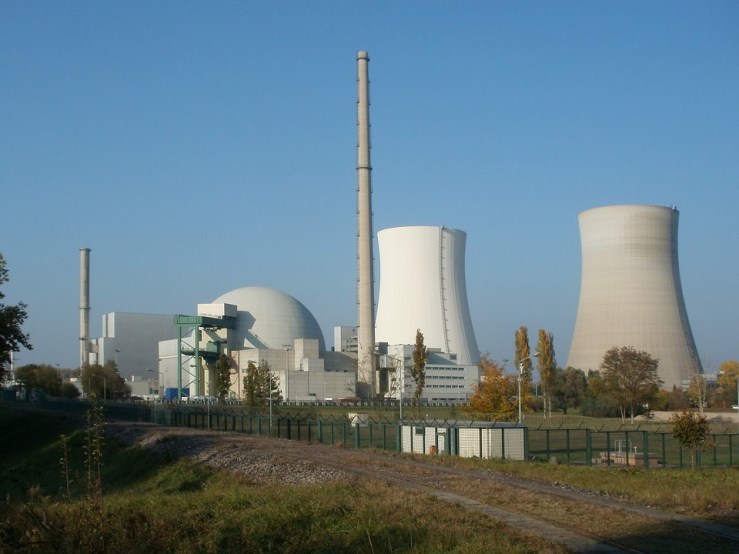
Nuclear Energy Doesn’t Have To Be Scary

nuclear-power-plant-837823_960_720


Quick – can someone tell me what potential source of energy could single-handedly provide all of the energy requirements of the US for the next 1000 years? And at the same time, foster independence in rare earth materials that are mainly sourced from China? And would not generate carbon dioxide as it is consumed?

No, it’s not coal. Coal can provide a significant portion of energy needs, and coal ash is a prospective source of rare earth metals that may be harvested, but it creates a huge amount of CO2 and has other detrimental effects, like the mountain top removal that is a blight in my home state of West Virginia. (Point of personal perspective – over 40 years ago, I had a part-time job as a chemist for a concrete company. There was a new coal fired power plant coming on line in Nebraska, and the concrete company was considering using coal ash as an extender for cement in making concrete. I performed wet chemical analysis of fly ash, going through most of the metals by reacting with reagents, then precipitating out various compounds and evaporating them to dryness in platinum crucibles. The reaction stream went all the way to sodium, which had to be precipitated with some uranium salt. I had fun doing that work, but the one thing I remember is that if you hit a fly with a stream of acetone used to dry dishware, you would cause the fly to drop out of the air instantly, and a dehydrated fly husk would be all that was left behind.)

Give up on the original question? It’s thorium, the radioactive material that has a 14 billion year half life. Thorium, along with uranium, was looked at by the US government when nuclear power and nuclear weaponry were uppermost in the minds of the government. But one factor weighing against thorium, turns out to be now a very beneficial factor. See, it is nigh unto impossible to obtain any nuclear weapon grade material out of the thorium fission reaction process. Uranium reactors will create plutonium as one of the natural byproducts of fission. If U238 (the most common uranium isotope in reactor fuel) absorbs a neutron, it becomes an extremely unstable isotope U239, which eventually transmutes into a plutonium isotope. Since U238 is the primary isotope in a pressurized water reactor, the spent fuel rods from a reactor will always contain plutonium. That is one reason why fuel rod security is required, since plutonium can be chemically separated from the toxic mix of radioactive stew found in a fuel rod.

Thorium, though, does not create plutonium. It does create the uranium isotope U233  which is the active fuel for a thorium reactor.  It also creates small quantities of another uranium isotope U232 which acts as a poison against creating a fission bomb out of U233 . So the issues of nuclear weapon proliferation by segregating out fissile material from thorium fuel are not of concern.

(Paragraph of translation. If you understand the concepts of isotopes, please skip over this paragraph.  Now, the last paragraph used a bit of physics jargon that is necessary to understand this post. I mentioned Uranium 232 (U232)  and Uranium 233 (U233).   Both of those refer to the element uranium, which has 92 protons. Where they differ is in the number of neutrons. Uranium 233 has one more neutron than does uranium 233. An element may have many different numbers of neutrons, and that is especially true in the heaviest (by atomic number) elements. These different isotopes have remarkably different characteristics, especially when dealing with nuclear reactions. This is important in the discussion below.

In order to appreciate the difference between a thorium reactor, and the current pressurized water reactors (PWR) using uranium, it is necessary to discuss PWR’s. The current nuclear power industry takes fuel rods and inserts them into the core of the reactor. A reactor contains control rods of neutron-absorbing materials. These control rods are raised and lowered in order to moderate the nuclear fission occurring in the fuel rods. If the control rods were raised totally out of the core, the fuel rods would not be able to hold the runaway nuclear reaction that would ensue. The zirconium cladding of the fuel rods would melt, and the contents of the fuel rods would pool at the bottom of the reactor. This event would not be good, putting it mildly.

When a PWR works properly, it heats water which is kept pressurized in the primary coolant loop. The water is circulated into a steam generator, where the steam is created which runs the electrical generators. Fuel rods in a PWR have a limited lifespan, and once they are no longer useful to generate electricity, these rods must be pulled out and stored in water to handle the immediate heat generated from nuclear reactions still continuing in the fuel rods. In some cases, the rods are held in water pools for 10-20 years. Then the rods must be kept secure and eventually stored somewhere where they will be able to stay segregated from the environment for geologically significant periods of time (hundreds of thousands of years). It is only after that much time has gone by before the spent fuel rods no longer pose a threat to health.

So, with uranium as the source fuel, you can generate enormous amounts of energy without CO2 generation, but with huge potential issues. You have extremely complex systems operating at incredible pressures and temperatures that must keep operating in order to prevent a runaway reaction. Then, if all works right, you have to take the fuel rods out after only a few percent of the potential energy is released, since the fission byproducts work to poison the reaction long before all of the uranium has fissioned.  And then you must isolate the fuel rods for hundreds of thousands of years, or else there is a risk of radioactive contamination of the environment. No wonder nuclear power is viewed with disfavor.

Thorium would be significantly different, though. Thorium reactors can use a molten salt as the liquid that would carry the thorium, the U233, and all fission products coming from the nuclear reactions. This means that the operating pressures of the system are far lower than in a PWR, reducing the potential for leakage or cracking of the containment system. And if the liquid salt does leak out, what would happen? It would freeze in place. Indeed, the possibility of a reactor core meltdown disappears with a thorium-fueled reactor.

It is essential to separate out the fission products and radioactive isotopes generated in this type of reactor. This can be done by taking a small side stream of the circulating salt solution, and using standard chemical separation techniques to return the unburned U233 to the salt solution. Other radioactive isotopes can be removed using this method. Because the fuel can be recycled indefinitely until it is burned, the remaining daughter fission products (the lighter elements remaining from a uranium nucleus that has fissioned) have a much shorter half life. Instead of hundreds of thousands of years for spent fuel rods to become harmless, it will only take a couple of hundred years for the fission byproducts from thorium to decay to a harmless state.

One thing that thorium has going for it is 4 times more plentiful in the earth’s crust than uranium. And it’s primary ore is one that includes rare earth metals and phosphate. So a commercial mining operation aimed at recovering thorium will also produce rare earth metals, and phosphate for fertilizer. All of these materials are essential for our modern economy.

Granted, any process involving radioactive materials has risks, and even though a thorium-fueled liquid salt reactor is simpler than a PWR, there are many challenges concerning the commercialization of this technology. But if we as a society are concerned with trying to develop energy sources that do not produce CO2 , and can serve as baseload power generators, certainly thorium reactors are a technology that should actively be researched. To think, we may have had the answer to our energy dilemmas in hand over 60 years ago, only to throw it away since thorium doesn’t lend itself to making good bombs (an oxymoron of the first degree).  Let’s try to rectify humanity’s mistake and work to investigate and commercialize this amazing resource we have been given from our earth.

Let the Games Begin


Let’s get ready to rrrrruuuummmmbbbblllle! The Senate Republicans have now laid down the gantlet, and it is now time for us to have a complete and thorough discussion and debate about government involvement in the health care system. One where open suggestions and ideas may be freely floated, and where hearings will bring forth legions of experts, putting forth the benefits of the case for both parties.

Oh. You mean that’s not going to happen? We’re going to barely have a week to discuss and debate this immense change being proposed to our already dysfunctional health care system, then a vote will be forced through? No other alternatives except for what 13 white male Senators came up with will even be considered?

I am truly disgusted by the spectacle of our legislators working hard to craft a bill aimed at causing the greatest amount of harm to the greatest number of people. The old adage was that the legislative and bill drafting process was akin to making sausage. That may still hold true, but it seems that a new step is added whereby the sausage has to pass through the digestive system before the new legislation is laid, steaming fresh, at the feet of its admiring partisan supporters.

It has come down to this. Both parties repudiate any notion of working across the aisle in order to craft a thoughtful comprehensive approach to dealing with the huge problem we have with excessive costs and maldistribution of health care services. Instead, one party works diligently behind closed doors to create a tax cut that only affects those who have income greater than $200,000 per year ($250,000 for joint filers). True, it also removes $19 billion in taxes imposed on medical insurers, pharmaceutical firms, and medical device manufacturers. The removal of these taxes shows the value of campaign contributions to the Senators who drafted this legislation. I saw today on TV that over the past few years, these Senators received about $0.5 million in campaign contributions from these entities. $19 billion / $0.5 million = $38,000 in tax benefits for each dollar in campaign contributions.

So we have a bill nominally posited as a health care bill, but in reality it’s a tax cut favoring the top 1% of income earners, and favoring those whose businesses greatly benefited by the increased demand attributable to the Affordable Care Act. And in order to frame this as a win for the average person, we will enable states to allow for limited insurance products, much like it was prior to the ACA’s implementation. Can’t wait to see the expression on the face of some poor schmuck who grabbed on to one of the new cheap health care insurance plans only to find out it pays a total of $400 per day for hospitalization expenses when they have to cover a heart attack hospitalization.. But it’s all good, since the health insurance consumer could have chosen a better plan (but couldn’t afford it).

Let’s have a real debate as the outcome of this faux discussion. Let’s make a determination whether we believe the US is an outlier from the rest of the civilized world, and make health care an independent responsibility, or whether we wish to join the rest of the world and enable a single-payer system to provide health care for all citizens.

My confidence that this type of discussion will occur in the hallowed halls of Congress? Less than the square root of negative 1. My reasoning? There is zero incentive for members of Congress to reach across the aisle and actively involve the opposition party in legislative negotiation. As the French have said, La Plus ça Change, la plus c’est la même chose. The more things change, the more they remain the same. It sounds better in French.

Whatever happens with the current health care bill negotiations, I sincerely doubt whether the outcome will improve the situation for the majority in this country who are dependent upon either government policies directly, or dependent upon the structures set up by the ACA.

I call for the creation of a brand new party that is no beholden to the existing power structure. I call for a Macron-like entity to take over US politics from the completely corrupt and compromised party structures that we are burdened with. Part of our problem in the US is that we do not have a parliamentary structure. If we did, then Nancy Pelosi would have been driven from her leadership position in disgrace over the last few election cycles as her position would have been exposed as having a fatal flaw. Meaning, the vast majority of voters in this country do not agree with a San Francisco liberal.

Nothing will happen unless enough of us speak out and demand change. Even then, there is no guarantee that we will see significant change. But I do know that if no one speaks out, there will be no change. I am speaking out, here and now.