Worship In A Troubled Time

Our normal Thursday night church choir rehearsal was interrupted, by a visitor who clearly did not belong. Now our church is home to an AA meeting happening at 8, but this visitor was an hour early if their intent was to go to that meeting. He came in in slippers, which he left at the front of the sanctuary. He wore what appeared to be a hospital gown, and went back to the last section of the sanctuary. We asked if we could help, but he said he was just there to listen. I found my eyes wandering back to him repeatedly to give me a heads up should he behave even more erratically. Then later in the rehearsal, he got back up, retrieved his slippers, and disappeared.

On the next Sunday, as we were practicing before the service, someone came in and sat in the front row of pews. Again, we asked if we could help, and in a voice straight from an apocryphal movie he described how he wanted the word of God preached so as to stir up the emotions of the congregation, and he wanted to know if that was going to happen here. We let him know the service began in about 45 minutes, and he was free to go to the Adult Forum down the hall. This was a different person from the one who interrupted rehearsal the previous Thursday, but he exuded a stench of weirdness across the sanctuary.  I half expected him to have LOVE and HATE tattooed on his knuckles, but fortunately never got close enough to confirm or deny this.

Why do I mention these two invasions? Because I am convinced it is only a matter of time before we are subject to someone who objects to our openness about LGBTQ topics. I mean, after all, we dedicated a plaque to Matthew Shepard that is now above the heads of one half of our choir. Someone will enter our sanctuary with a fully functional assault rifle, and decide to make their moral stand in favor of the vitriol of the old Testament, or the various sogynies that Paul espoused over his evangelistic career. Indeed, the Jesus who spoke the Beatitudes is foreign to most of these vindictive souls, who follow the letter of the word rather than the intent of Christianity as described by Jesus. I am so furious about the perversions of Christianity we see daily as followers of Trump conflate his actions with those of their supposed Lord and master.

We at St. John’s in Charleston are particularly vulnerable. We’ve been home to a ministry that feeds all comers, breakfast and dinner, since the mid-70’s. It was literally a godsend for the working poor who would participate. But somehow since the pandemic descended, things just haven’t been the same. Now this week there was an incident that affected the Catholic school across the street, and the immediate response is to stop the serving of meals at the church. For how long, we cannot say. This will help in reducing the number of potential intruders, but for the most part, it is not the mentally unstable who participate in this ministry that cause the most concern.

It seems the whole US society is subjecting itself to an uncontrolled experiment. Unabated access to firearms with no controls whatsoever. More and more guns flood the streets, and it is obvious guns are in the hands of people who are not stable enough to possess said weaponry. Yet many cry out for even more access. We should have the ability to purchase silencers with no limits. We should have bump stocks to convert a semi-automatic into a weapon almost like an automatic rifle. And if I am accused of an offense serious enough to trigger a domestic protective order? Since I am only accused, it will violate my constitutional rights to own a weapon if the order results in the removal of my weapon. It literally does not matter that your odds of becoming a gun victim go up if you own a weapon, the answer to all weapon offenses is let’s have more weapons.

So I will continue to sit in the choir pews awaiting the inevitable. It is not what I originally signed up for in becoming a choir member. I thought I was lending my voice as my gift to our worship services. Unfortunately in this day and age, in the country I live in, more and more we sit as potential victims to the next unstable person with access to weapons, who is convinced that the moral sin of mass murder is less odious than the horrendous sin of supporting the LGBTQ community. Odds are still in my favor for not having to face such a person. But I ask for how long?
How Can I Keep From Singing?

WVSO

I have been fortunate so far during this pandemic. My family has not contracted the disease, my income has been steady since I am retired, and both of my sons in neighboring states are still employed. In fact, my older son quit his job due to concerns about the morality of keeping his bookstore open to walk-in traffic, and ended up getting a better job in a management training position. So it seems like the height of arrogance to mention what this pandemic is taking from me.

I am a singer. I have always been either in church choirs, choral groups, or even belting out songs on stage. For over 50 years, singing has been an integral part of who I am. But. With the corona virus, that has come to an abrupt halt. For how long, I don’t know. See, when you sing, you also spray. I see little drops on the music sheet as we go through the pages of scores. You accept the fact that you will spray others, and others will spray you. Before the advent of this virus, that was of little consequence. You accepted it, just like you accepted the shoulder-to-shoulder experience, especially when you have the opportunity to sing a major choral work with an orchestra accompanying you.

Now, it is apparent that choral singing is a breeding ground for exposure to the virus. Many have seen this report  from the CDC that showed 87% of singers in a community chorus were infected after two weekly rehearsals in the Seattle area after community transmission began. As a result, both my wife and I have had to reconsider our involvement in our singing groups. When our church goes back to live services, it will likely be without choral singing. Quite simply, there is no way you can provide adequate spacing in space-limited choir lofts to ensure a lack of viral transmission. Since I have always considered my singing to be a significant part of my service to our church, and a reason why I continue to be a church member. Now? What will take its place in my soul? As the hymn says, “How can I keep from singing?”

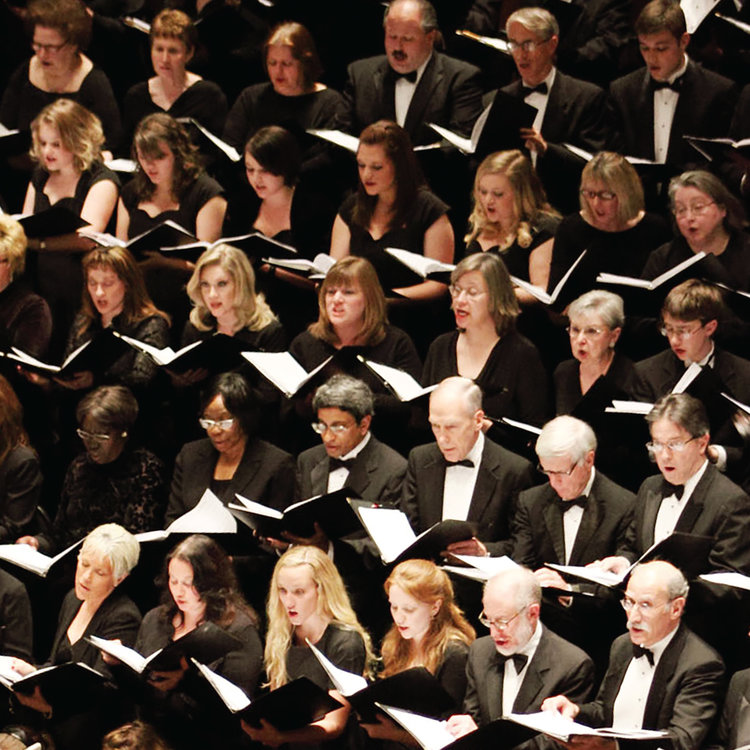
Similarly, to be a member of the local symphony chorus will also come into question this year. We already lost a performance of Carmina Burana this spring when the symphony cancelled its remaining concerts. The chorus will likely come back in September, and during a normal year, we would begin work on the major piece (Mozart Requiem) scheduled for next spring, while preparing our own music for a chorus concert around the holidays, along with the music to share with the holiday pops concert with the West Virginia Symphony. We’ve already decided that we will likely miss the fall season, with the hope that conditions have changed enough by this winter that we will be able to participate in the spring. Since we’ve sung the Requiem several times, it is not a matter of learning the notes, but bringing the parts back into active memory so that the singing becomes natural and nuanced. We can do that just with rehearsals after the first of the year. But the decision to forego the fall semester comes with a deep sense of regret. We are in the target demographic for this virus, and although we’ve been spared the crisis of larger cities, the virus is opportunistic, and loves to spread through exactly the type of gathering we participate in. So even if we avoid catching the virus, it still is exacting its price from us.

How Do You Get To Carnegie Hall? Take a Bus!

Carnegie Hall.jpg

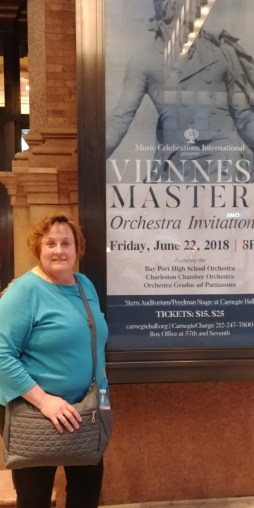
There are locations that are sacred for practitioners of the arts. For musicians, one of these locations is Carnegie Hall (the one in New York, not the one in Lewisburg, West Virginia). It has served as a mecca of music for over 125 years since its opening in 1891. Last week, I had the great fortune to attend an orchestra festival, seated in a box seat just above the main floor, and listen to three youth and community orchestras perform. I came to see the Charleston Chamber Orchestra, which was the last of the three groups to play. They played three pieces, with the centerpiece being a movement from the Shostakovich Piano Concerto #2. The pianist exuded sensuality as she pounded the keys, expressing through her fingers the quintessence of Russian soul music, flinging back her mane of curly hair as she bounced on the bench. And complementing and contrasting the piano, the high notes of the piccolo played on, providing piercing punctuation to the percussion of the piano. My wife was on stage of Carnegie Hall, sounding the high notes that as she says, “Only the dogs can hear.” Well, my high frequency hearing still must be in good shape, because the night before in a smaller venue, those same notes actually hurt my ears.

The Charleston Chamber Orchestra exists due to the vision of its founder, Dr. Scott Woodard at West Virginia State. When the resident string quartet for the West Virginia Symphony was cut loose in a cost cutting measure, Dr. Woodard was able to offer employment, and an opportunity to participate in his dream, a symphony orchestra of the community. Music students at State, high school students from the Youth Symphony, professional musicians both past and present, and members of the community who have the ability to tackle a symphonic repertoire, all are members of this orchestra. This includes a blind flutist who sits next to my wife, who is able to play despite never seeing the baton beat the tempo. The orchestra has existed for fewer than three years, but this year they were invited to a festival in Carnegie Hall based upon an audition tape (we still call them tapes even though no physical media is used to record). The orchestra has a fairly full wind section, is light on strings, but is capable of tackling serious symphonic pieces. Well enough to receive a standing ovation in Carnegie Hall.

Charleston Chamber Orchestra


I was able to hear this group’s improvement from its inception. My wife got in on the ground floor, having grown acquainted with Dr. Woodard when she served as adjunct faculty. The group has another performance scheduled early next year in the Kennedy Center in Washington, and a dream about collaborating with an orchestra in Vienna. In my own life, music has allowed me to sing in music festivals in Charleston S.C. It has allowed me to perform on stage with Jennifer Garner. It has allowed me to accompany my sons when they were with the Appalachian Children’s Chorus on trips through central Europe, and to Oahu. And now, music allowed me to have the experience of being seated in a box in Carnegie Hall, enjoying the sounds not only of my friends, but also to hear youth orchestras from Green Bay and from the Bay region in California. You don’t have to be a professional musician to allow music to expand your range of experience in a lifetime. But it does take time and effort, and at least a moderate amount of talent to ensure that you don’t make a fool out of yourself. The musicians in this orchestra? Let me replace the word moderate with the word plentiful, and that comes closer to capturing their performance.

The day after the performance, we boarded a bus back to Charleston. It was ironic that the first movie that was played on the return trip was “The Bucket List”. Many of those in the orchestra had just completed checking one or more items off of their personal bucket lists.


Tumbling Tumbleweeds

Tumbleweeds

Photo copyright of the Huffington Post

Up until about 100 years ago, human entertainment meant being in the physical presence of the person or people providing the entertainment. From the ancient days where stories of survival and of origins were shared around fires that kept wild animals at bay, to times where a bone was drilled and put to the lips to create a flute, to times when an animal skin was drawn taut across a surface and a drum was made, early humans had an extremely personal relationship to their entertainment. Over time, as villages grew into cities, and amphitheaters served as gathering places for crowds to be entertained by specialists, entertainment began to be distanced from the audience. Still, the urge to provide entertainment within the family was strong, and helped in ensuring that a common culture bound the inhabitants of a nation together.

With the advent of commercially available recorded music, it became possible for performances to be shared across space and time. No longer was it necessary to be physically in the theater to hear a master perform, you could play a piece of music in your home, and no one in your family needed to have the skills to actually make music. And since artists could leverage their talents across a commercial audience, they had financial incentive to make their recordings attractive.

Radio was the next intrusion in the brain / entertainment interface. Now it was possible to share an evanescent moment that came into a house over electromagnetic waves. Voices could share a symphony, or a popular tune, or a news bulletin, or a Presidential speech, to an audience undreamed of only a few years before. Humanity became used to hearing voices and other coherent noise coming out of boxed enclosures that ran on electricity. You could listen to something as you did something else – maybe a dance tune while you washed the dishes. It became possible to multi-task.

Television was the next intrusive medium. It replaced the one-sense media input of radio, and substituted the two-sense audio and visual input of television. Once it was possible to share a presentation across a nation, the need to provide your own entertainment diminished further. We turned to passive imbibing of the media and its entertainment, and the piano in the corner of the living room sat idle more often than not. No longer was there a common language of music, from folk songs shared across a nation, but the new medium allowed for the balkanization of culture. The images of heathen dancing, reminiscent of tribal pagan dances, were blasted through the TV screen into houses across the nation, and the messages of young lust resonated with the youth generation ascending after World War II.

Divisions fostered by the ease of media consumption drove cultural differences. In the 1960’s, rock music with its message of rebellion and freedom, drove popular culture into new directions. The older generation was able to still enjoy the ballads and big bands they were comfortable with. Look up “Sing Along With Mitch”  if you wish to watch the last remnants of the popular culture for the Greatest Generation before it was swept away. Finally, another strain of popular culture emerged, with roots back in Appalachian music, as country music found an audience that did not share the hedonistic beliefs embodied in rock and roll. While the Who cranked out “Won’t get fooled again” to demonstrate the desire of the rockers to reshape society, Merle Haggard repudiated this movement with “Okie From Muskogee.” Battle lines formed during the late 1960’s still play out today in politics.

After the explosion of media input from the 1950’s through 1970’s, the fragmentation of the culture continued, but at a slower pace. Musically, reggae and disco battled for prominence. It was not until the advent of rap and hip-hop that a new entry into the culture wars really took hold. Rap and hip-hop provided a cultural perspective from the viewpoint of the minorities who never felt comfortable sharing in the larger culture. Even though their parents and grandparents created jazz, and R&B, those offerings were co-opted over time. But the raw energy of rap artists, enunciating their discontent with society, managed to rub many of the mainstream culture inhabitants the wrong way. The urban nature of these new offerings was alien to the experiences and beliefs of fly-over country. Yet another division was created in the muddled cultural landscape of the nation.

Television did not stand idle during these decades, either. A new genre of TV shows were created, where unknown personalities were coached to go through situations and create drama and comedy. These shows were inexpensive to make, and surprisingly popular with the viewing public. Reality TV became a new category for the networks, and the cable television providers. Now, more than ever, it became possible to gain unprecedented fame simply by being famous. Content and substance no longer was even important to the consuming audiences. The increasing passivity of the audience kept growing over time.

Into this environment, the smart phone was released and the internet blossomed. The new tools and toys embedded in these devices exacerbated the balkanization of the culture. But one thing new did result from the smart phone era. Now, more than ever before, the consumers of culture could become producers of culture. The bar to entry of needing expensive electronic equipment along with an entire network to make images available, no longer existed. Anyone had a chance at creating a video, uploading it to You-Tube, and having the lightning of viral success strike.

The use of smart phones though, comes at a significant price. That price is concentration. Now for the first time in human history, it is possible to eschew the need to concentrate on anything in order to enjoy the fruits of the culture. Selfies posted on Instagram fulfill the need for self-aggrandizement. Myriads of games enable those who are addicted to pick up their phones for mindless play, rather than have to partake of the moment they are in, and maybe actually reflect and think. Twitter survives and thrives because we all have to kibitz in the moment, and insert our own limited link thought pattern into the public sphere. Those rooted in the past abhor the conduct of diplomacy via tweet, yet given the descent of the culture into shallowness, it was inevitable.

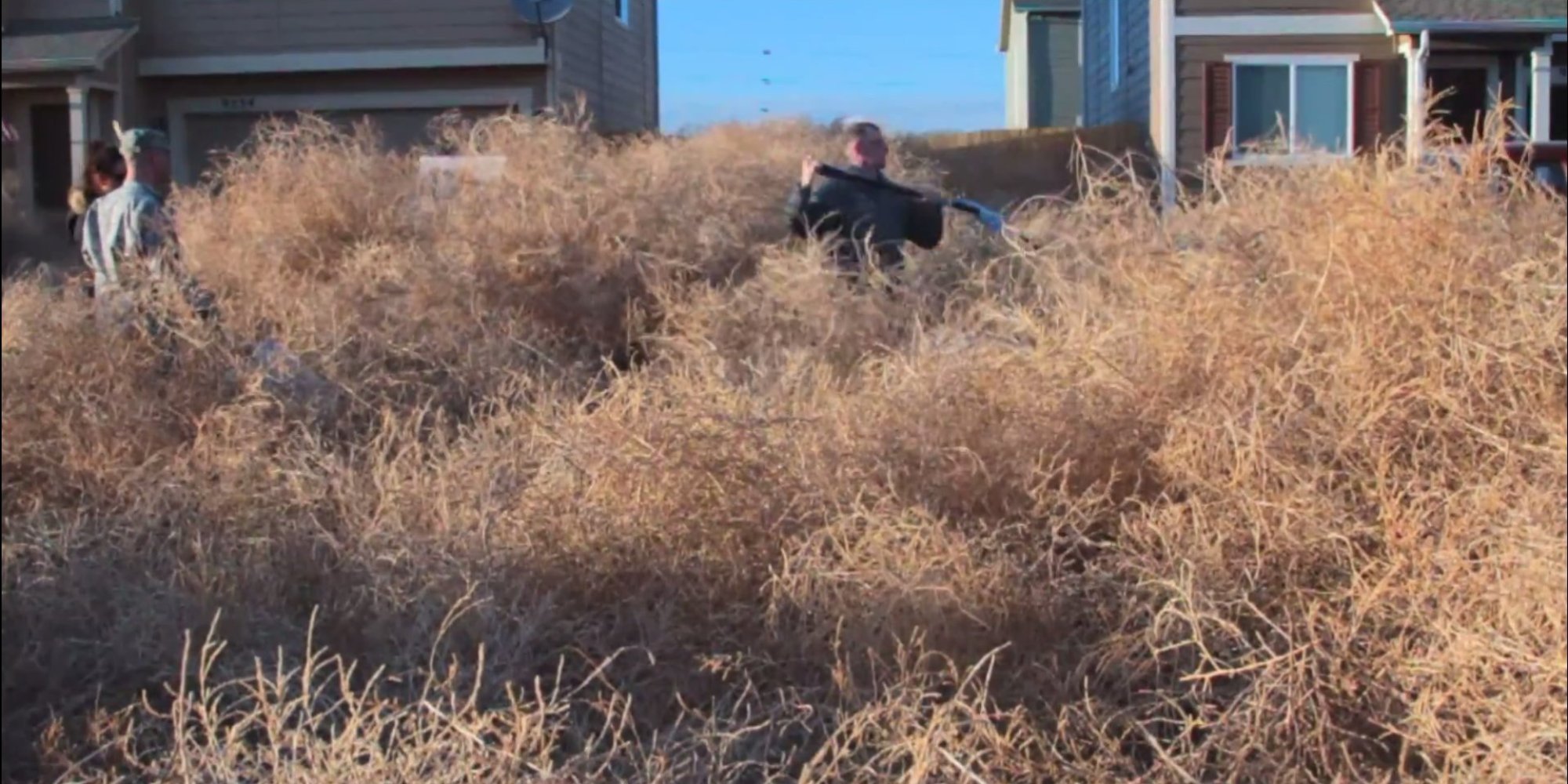
Those of us who bewail the decline of concentration have few options. Some find it beneficial to use the tool of the internet to create their own blog, where they can expose their souls through words (guilty as charged). Others may self-select to stay rooted in the “higher” culture of the past, whether that be classic books, or Broadway productions, or symphonic music, but the median age of those who partake of this keeps climbing. Soon, the audiences for these forms of cultural expression will fade away as they die off. Then all that will be left is the chaff of a culture, rooted so shallowly that the first storm will tear it out of the dirt and all we will be left with is torrents of Tumbling Tumbleweeds , piling up around the relics of our society.

Requiem, Aeternam

WVSO

 Photo of the West Virginia Symphony Chorus.(from the WVSO web site)

You have to be a bit of a masochist to want to sing in a symphony chorus when you are over 60. We just completed performing the Verdi Requiem with the West Virginia Symphony, and over the past 3 days, we sang the choral parts or performed the 85 minute requiem a total of 5 times. Sat in the back of a bus going from Charleston to Morgantown, a 3 hour ride each way on Friday. Was shoehorned into seats on the stage – we had nearly 320 singers, soloists, and symphony members on the stage for last night’s performance in Charleston. About 250 of those were chorus members, waiting for their chance to sing Verdi’s dramatic and poignant melodies.

For us, the work on the Requiem began last spring, as we were finishing up the chorus year and received our copies of the work. We familiarized ourselves with the scores then, and followed up our introduction with a late summer workshop where we went through the entire work. Then each Monday evening after Labor Day we had rehearsals, up through this past Monday (November 6) for two hours. All of us undoubtedly put in extra time cuing up the Requiem on YouTube, working with our scores to help ensure familiarity with each difficult part. Then came the Thursday through Saturday marathon where it all came together.

There really is very little time to put together a massive work like this. The main reason is money – each session with the orchestra for rehearsal or for a performance must be paid. The orchestra musicians put in much more independent time with the scores, since they are professionals and are compensated for their work and time on stage. But the amateurs who are chorus singers had no opportunity to come together until our first rehearsal with the orchestra. We had 5 different choruses join forces for this work. Our Symphony Chorus, and the choruses from 4 different colleges and universities across West Virginia were all represented on the stage.

So on Thursday, we had little more than an hour to practice together without an orchestra, then the orchestra players came in after their contractually mandated dinner break. A 2 1/2 hour session on Thursday, then an afternoon session on Friday after our bus drive up. Two rehearsals was all that we had together as an ensemble to piece together this exquisite work.

Why do we do it? What motivates us to invest the time and energy and money in order to support our singing habit? I’ve seen much writing about music, and its energizing and motivating force. Let me just say that you’ve never felt music’s full power until you are sitting directly behind a professional orchestra, playing some of the most lyrical and powerful music ever written. Then you are invited, nay, urged to lend your voice to the mélange, and not only that, but to sing with full expression and full power as you plead with God to keep from sending you to the pits of hell.

This type of music is difficult. It is always a challenge to sing a fugue, where each vocal part is echoing the other sections, melodies intertwining throughout the section, and it can be devilishly difficult to keep on tempo, and have the correct Latin words come out of your mouth. The challenge is one of the main reasons for doing this – it is because you can, and you are confident enough in your own abilities that you believe you will not crash the concert due to your own mistakes. For although you as a chorus singer cannot make the concert wonderful on your own, each of us had the ability to create huge mistakes that would have ruined at least a part of the performance.

It is difficult to describe the connection between a conductor and a chorus, when both are in synch. The conductor has control of everything going on, and with a dramatic work like the Verdi, our conductor played up the dramatic pauses. We watched, totally engaged and concentrating, as he demonstrated when to begin a phrase where we sang a capella, and when to stop and place the final consonant. That is another reason to do a work like the Verdi, it forces you to concentrate and be fully alive in the moment. There’s not many experiences in life that engage you to that extent.

The main reason, though, that I continue to perform music like this is because it allows me to participate in the creation of beauty that represents the peak of Western civilization (in my opinion). Choral masterworks, especially those of a sacred nature, touch at human emotions in their most naked form. Pathos and pleading to God for mercy for our sinful nature. Lyrical melodies that will stay in my head for months and years as we sang about the lamb of God. Verdi was an opera composer, and is acknowledged as one of the best of all time, but many say that his Requiem was his greatest opera. To be a participant in a performance of such a work is exhilarating to the soul, even though it saps the body and causes knees to ache and feet to throb. That is why I said at the start that you have to be a masochist to participate in such a work, especially if you have a bit of wear and tear on your body. Singing is a physical activity, and the young, especially college students, are best suited to deal with its demands. I do not know how long I will be able to stand its challenges myself, but the rewards of creating and hearing beautiful music from the center of its creation is still worth the pains it creates.

For those who are unfamiliar with the Verdi Requiem, please go to YouTube and enter it. You will see hundreds of performances that have been loaded to the web. Try it, and if you have an ear for romantic music, you will fall under Verdi’s spell as I have.